
Our Products Help Waterways & Stop Invasive Fish | Letting Trout Thrive
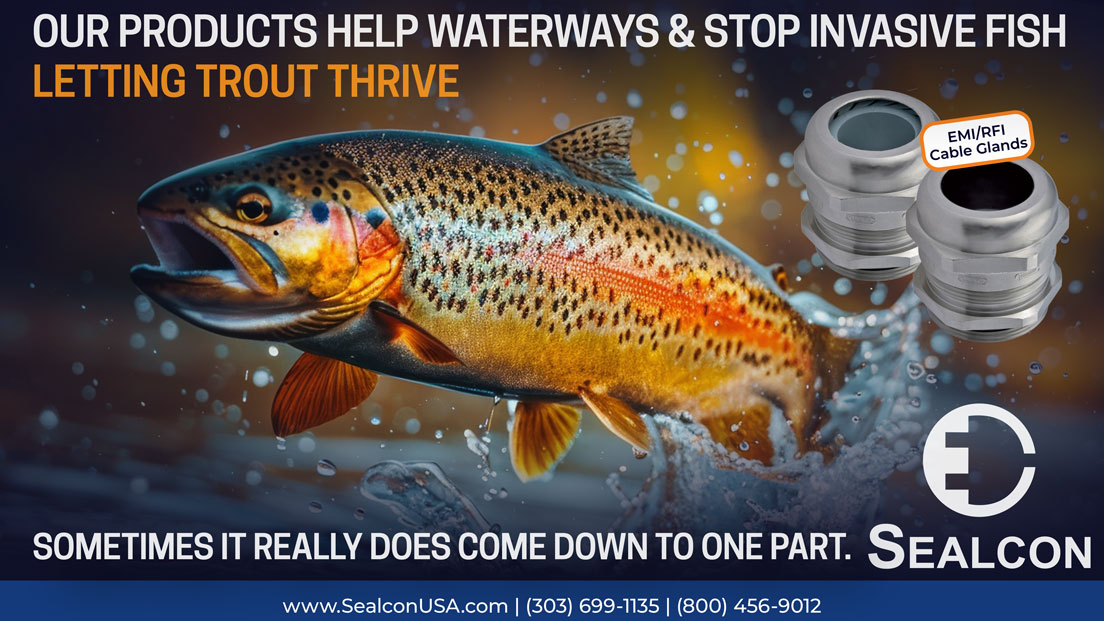
Sometimes it really does come down to one part.
More often than you’d think, that part is something Sealcon built to hold its ground when everything else around it is under stress, extreme conditions, tight tolerances, and a long list of certifications that make sure it doesn’t fail when failure isn’t an option. It’s a small component holding the line so the bigger system can keep doing its job.
Take EMI/RFI Elongated Feed-Through cable glands. They’re built to shield sensitive equipment from electrical interference in demanding environments, the kind of environment you’d find, in a stretch of canal in Illinois where the U.S. Army Corps of Engineers is running an underwater electric fence to keep an invasive fish out of the Great Lakes.
The Fish That Wouldn’t Stay Put
In the mid-20th century, wastewater treatment plants and ponds across the U.S. began importing a few species of Asian carp, mainly bighead and silver carp, because they were excellent at clearing out algae blooms and other pond nuisances. It seemed like a simple fix.
It didn’t stay simple. The carp escaped into the wild during floods, out-competed native species with no natural predators to keep them in check, and spread through the Mississippi and Illinois River systems. In some stretches near Peoria, Illinois, invasive carp now make up roughly 95% of the entire fish biomass. They can weigh over 30 kilograms, startle easily, and leap out of the water, a hazard for anyone in a boat nearby.
It’s become a familiar story online: a well-intentioned fix that turned into a full-blown ecological takeover. But the more urgent question isn’t what’s already happened upstream, it’s what happens if these fish reach the Great Lakes.
The Choke Point
The Great Lakes support a fishing industry worth an estimated $7 billion and a recreational boating industry worth roughly $16 billion. Trout Unlimited Troubled By Proposed Elimination Of Great Lakes Restoration Initiative They’re connected to the carp-infested Illinois River system through one place: the Chicago Sanitary and Ship Canal, a fully manmade waterway built about a century ago when engineers reversed the flow of the Chicago River to flush sewage and wastewater away from the city, one of the largest civil engineering projects in American history.
That connection created a shipping route Chicago still relies on. It also created a direct path for invasive carp to reach the Great Lakes, unless something stops them.
Enter the Electric Barrier
Why the US Army electrifies this water
That something is a section of electrified canal, engineered and operated by the U.S. Army Corps of Engineers. Submerged electrodes sitting about 21 feet below the surface pulse direct current into the water dozens of times per second, creating a voltage gradient, essentially an underwater speed bump. At two of the barrier sections, the target is roughly 2.3 volts per inch at the surface; at another, it’s closer to 6.0 volts per inch.
Fish that swim into the gradient get stunned and drift back downstream. Biologists regularly capture, tag, and release fish around the barrier to track whether any make it past — and so far, the barrier has held the main population back. Individual fish have occasionally turned up on the wrong side, and small fish in particular are harder to deter, especially when barge traffic passes through and the voltage has to be adjusted to account for the vessels’ steel hulls. It’s a system that requires constant monitoring, maintenance, and refinement, with multiple barriers running in sequence so at least one is always active while another is serviced.
The equipment that runs and pulses this barrier operates in a genuinely harsh, high-stakes environment: constant moisture, high voltage, and zero tolerance for component failure. It’s exactly the kind of environment where cable glands and connectors need to do their job without drawing attention to themselves.
A Part Worth Being Proud Of
We can’t name the distributor or the specific project this component was supplied through, that’s not information we’re able to share. But we can say this: knowing that a small, unglamorous part played even a supporting role in a project protecting a multi-billion-dollar ecosystem is exactly the kind of story that reminds us why tolerances and certifications matter.
If your application calls for components that need to perform reliably in tough, high-voltage, or otherwise unforgiving conditions, take a look at our line of EMI/RFI cable glands and IP-rated enclosures built for exactly that kind of work.
See more at www.SealconUSA.com or call 800-456-9012
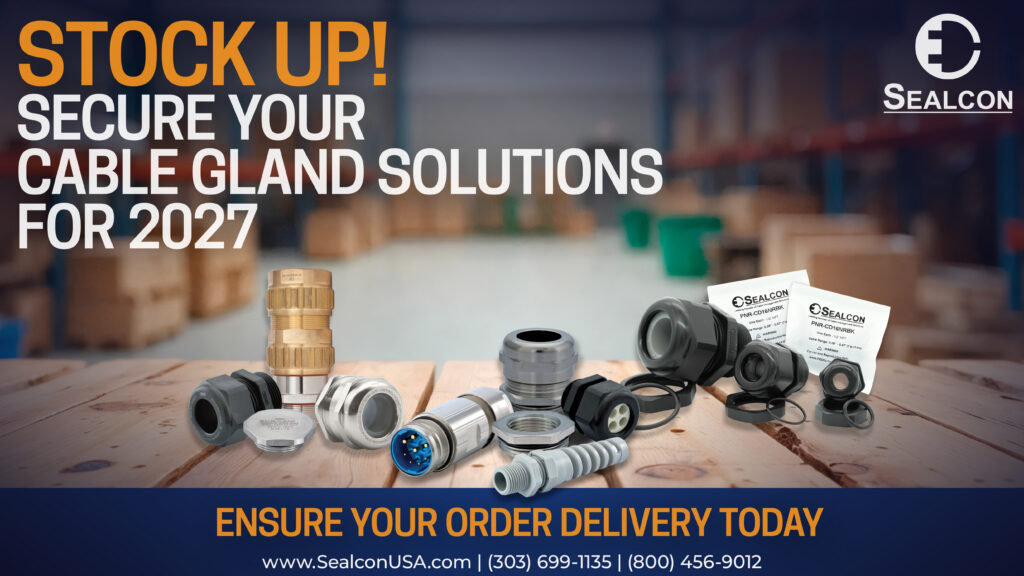 Stock Up! Secure Your Cable Gland Solutions for 2027
 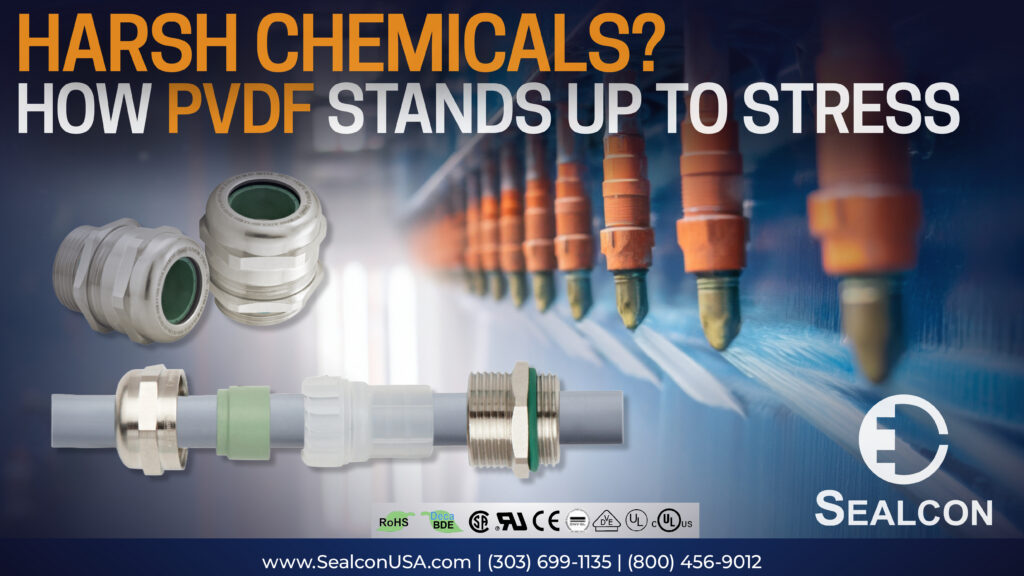 Harsh Chemicals? How PVDF Stands Up to Stress
  Wrong Thread or Size? Save Your Project with Cable Gland Accessories